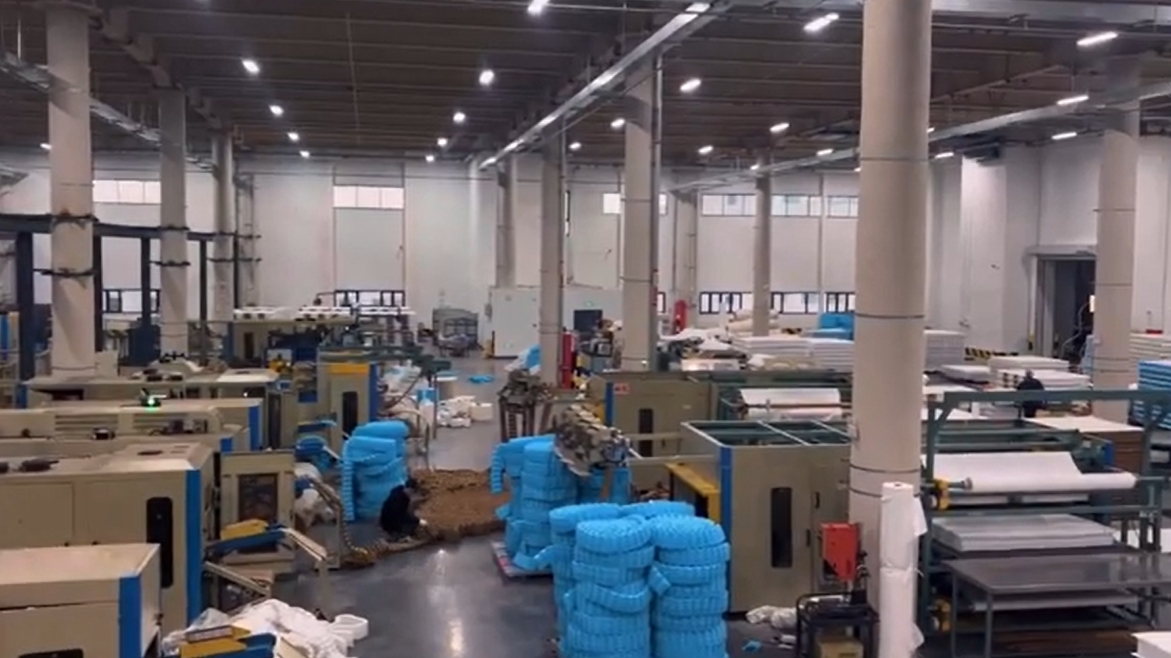
As consumer demand for personalized comfort and quality bedding grows, mattress machines have evolved from basic manufacturing tools to high-tech production core—driving efficiency, consistency, and innovation in the global bedding industry. These specialized machines address the limitations of traditional manual production, enabling mass customization while upholding strict quality standards for mattresses of all types.
Mattress machines encompass a diverse range of specialized equipment tailored to different production needs. Spring mattress machines, for instance, integrate automatic coil forming, pocketing, and quilting functions, ensuring uniform spring tension and precise arrangement—critical for long-term support. Foam mattress production lines feature high-precision cutting machines that slice memory foam or latex into custom thicknesses with minimal waste, paired with laminating systems for seamless layer bonding. Hybrid mattress machines combine these capabilities, merging innersprings, foam layers, and fabric covers in a single streamlined process.
Automation and precision are the defining advantages of modern mattress machines. Equipped with PLC control systems and touchscreen interfaces, they reduce human error and boost production efficiency by 30-50% compared to manual methods. Advanced models offer modular design, allowing manufacturers to switch between mattress sizes (twin to king) or adjust firmness levels in minutes—catering to the rising demand for personalized bedding. Additionally, integrated quality inspection sensors monitor stitch density, layer alignment, and foam density, ensuring every product meets consistent standards.
Sustainability and versatility are also key design focuses. Many modern machines adopt energy-saving motors and optimize material usage, reducing carbon footprints and waste. They support a wide range of materials, from eco-friendly recycled foams to natural latex and organic fabrics, aligning with consumer preferences for sustainable products. For small to medium-sized enterprises, compact, cost-effective models enable entry into specialized markets, while large-scale production lines handle high-volume orders for global brands.
As the bedding industry embraces smart technology, mattress machines are further evolving. Future iterations may integrate AI-driven quality control, IoT connectivity for real-time production monitoring, and robotic arms for seamless material handling. These advancements will not only enhance efficiency but also unlock new possibilities for customized comfort, such as zone-specific support or temperature-regulating layers.
In essence, mattress machines are the backbone of modern bedding production—bridging craftsmanship and technology to deliver consistent, comfortable, and innovative products. For manufacturers, investing in advanced mattress machines is not just a cost-saving measure but a strategic move to stay competitive in an industry where quality and customization reign supreme.