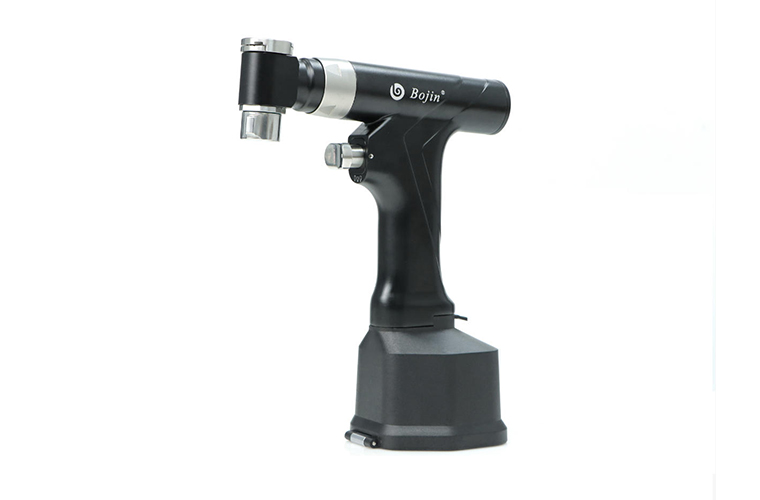
In the operating room, where control and minimal tissue damage are paramount, the surgical oscillating saw stands as a transformative instrument. Unlike traditional rotating saws, this tool operates through rapid back-and-forth (oscillating) movements, making it ideal for cutting bone, cartilage, and soft tissue across diverse surgical specialties. Its unique design balances cutting efficiency with precision, solidifying its role in procedures from orthopedics to maxillofacial surgery.
The core advantage of a surgical oscillating saw lies in its motion mechanism. Instead of spinning, the blade moves in a short, controlled arc—typically 5 to 20 degrees—at speeds ranging from 1,000 to 10,000 oscillations per minute. This motion reduces the risk of tissue tearing or bone splintering, as the blade makes contact with the target material in quick, gentle bursts. The oscillating action allows surgeons to navigate tight anatomical spaces with greater confidence.
Design and blade versatility enhance its clinical utility. The saw’s ergonomic handle, often lightweight and non-slip, minimizes surgeon fatigue during long procedures, while adjustable speed settings let clinicians tailor performance to tissue density—slower oscillations for delicate cartilage, faster for dense cortical bone. Blades come in specialized shapes: straight blades for linear cuts in orthopedic surgeries, curved blades for contouring bone in facial reconstructive work, and serrated or smooth edges for soft tissue dissection. Most blades are made from medical-grade stainless steel or cobalt-chromium alloys, ensuring sharpness, corrosion resistance, and compatibility with high-temperature sterilization.
Clinical applications of the surgical oscillating saw span multiple fields. In orthopedics, it is indispensable for joint replacements, fracture repairs, and spinal surgeries (removing bone spurs or decompressing vertebrae). In maxillofacial surgery, it aids in jaw reconstruction, dental implant preparation, and corrective procedures like cleft palate repair. It also plays a role in trauma surgery, where it quickly and safely removes damaged bone fragments, and in veterinary medicine, adapting to the anatomical needs of animals.
Safety features are integral to its design. Many models include anti-kickback technology to halt blade movement if unexpected resistance is encountered, preventing injury to the patient or surgeon. Disposable blades eliminate cross-contamination risks, while reusable blades undergo rigorous testing to ensure durability across multiple sterilization cycles.
In conclusion, the surgical oscillating saw exemplifies how engineering innovation enhances surgical care. Its oscillating motion, versatile design, and safety features make it a preferred tool for procedures requiring precision and minimal tissue disruption. As technology advances, future iterations may incorporate wireless connectivity for performance tracking or AI-assisted speed adjustment, further elevating its role in delivering optimal patient outcomes across surgical specialties.